

Paint in the UAE fights a daily battle against UV, fine desert dust, salty coastal air and 45C-plus summer heat. The table below sums up which threats do the most damage and what actually works against them, before we drill into the two protection choices most drivers get wrong.
UAE paint threats and how to counter them
| Threat | What it does to paint | How common in the UAE | Best countermeasure |
|---|---|---|---|
| UV radiation | Oxidises clear coat, fades colour, dulls gloss | Year-round, UV index often 11+ in summer | Ceramic coating or PPF, covered parking |
| Sand and dust abrasion | Micro-scratches, swirl marks, hazing | Daily, worst during shamal winds | Rinseless pre-wash, two-bucket method, PPF on leading edges |
| Bird droppings and tree sap | Etches through clear coat within hours in heat | Common near parks, palms and marinas | Remove within the same day, spot-clean with detailer spray |
| Hard water spots | Mineral deposits bond to paint, leave rings | After rain, sprinkler overspray, tap-water washes | Deionised final rinse, immediate drying with microfibre |
| Coastal salt and humidity | Accelerates corrosion, dulls trim | Constant in Dubai Marina, JBR, Abu Dhabi Corniche | Underbody rinse, sealant every 3-4 months |
| Improper washing | Swirl marks, holograms, stripped wax | Very common with roadside washes | pH-neutral shampoo, clean mitts, no brushes |
| Automatic brush washes | Deep linear scratches across panels | Widespread in petrol stations | Avoid entirely, use touchless or hand wash |
Why UAE conditions punish paint faster
The UV index in the Emirates regularly sits at 11 or higher between May and September, which the World Health Organization classifies as extreme. Surface temperatures on a car parked in direct sun can climb well past 70C, hot enough to soften clear coat and speed up oxidation. Add fine airborne silica from the desert, salt-laden humidity from the Gulf, and the occasional acidic rain shower that dries into mineral rings, and you have a climate that ages a neglected finish in one summer the way a European climate would in three.
The good news is that preventive care is straightforward. Most damage is cumulative, which means small habits (a proper weekly wash, quick removal of bird droppings, a shaded parking spot) compound just as fast as the damage itself. Skipping them is what shortens repaint intervals and cuts resale value.
Improper washing: the fastest way to ruin paint
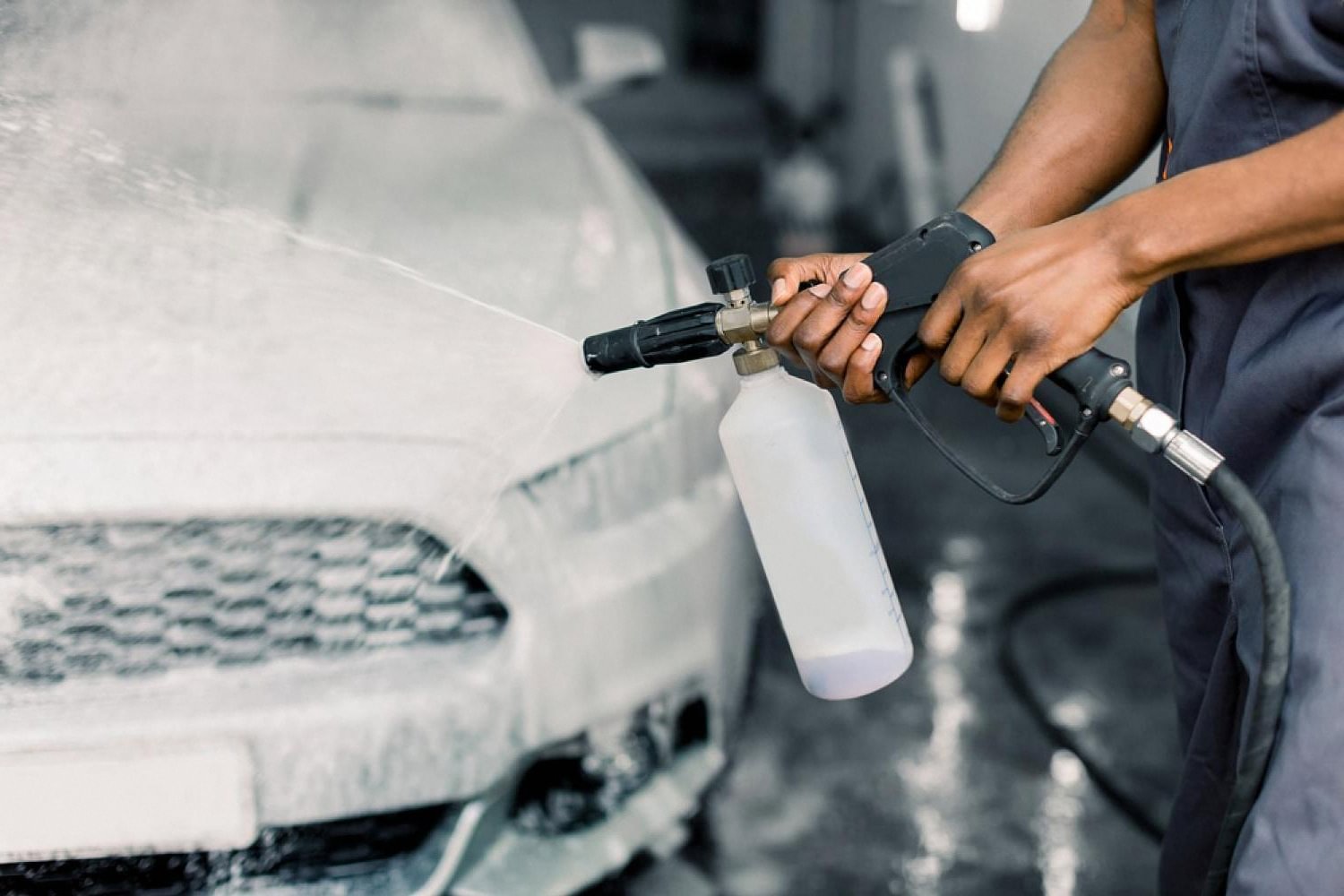
The single biggest source of swirl marks on UAE cars is not the desert, it is the wash itself. A dirty sponge dragged across a dusty panel acts like sandpaper. Roadside washes that reuse the same bucket on ten cars, or petrol-station tunnels with stiff rotating brushes, are the worst offenders. Even at home, using dish soap strips wax in a single wash and leaves the clear coat unprotected against the next UV cycle.
The safe method is boring and effective: rinse first to flush loose grit, foam the car with a pH-neutral shampoo, wash top-down using two buckets (one for clean suds, one to rinse the mitt), then dry immediately with a plush microfibre towel before the sun bakes minerals into the paint. Never wash a hot panel and never wash under direct sun.
Choosing the right protection layer
Every paint protection product does the same basic job, it puts a sacrificial layer between your clear coat and the environment. What differs is durability, gloss, cost and how well it copes with UAE-specific stress. Here is the honest comparison.
| Product | Typical lifespan in the UAE | What it protects against | Best for |
|---|---|---|---|
| Carnauba wax | 4-8 weeks | Light UV, water spots | Weekend cars kept in a garage |
| Paint sealant (synthetic) | 3-6 months | UV, mild chemicals, water spotting | Daily drivers on a budget |
| Ceramic coating | 2-5 years | UV, oxidation, chemical etching, easier washing | Long-term ownership, dark colours |
| Paint Protection Film (PPF) | 5-10 years | Stone chips, sand abrasion, minor scratches | Bonnets, bumpers, luxury and sports cars |
| PPF plus ceramic on top | 5-10 years | Physical impact and chemical damage combined | Owners who plan to keep the car and want zero compromise |
For most UAE drivers, a quality ceramic coating on the full body plus PPF on the front end is the sweet spot. Wax alone melts too fast in summer to be worth the effort, and a sealant is fine as a stopgap but needs re-application before every season change.
In Dubai heat, a wax layer that lasts three months in Europe lasts three weeks on your bonnet. Match the product to the climate, not the marketing.
Seasonal care through the UAE year
Summer (May to September)
Wash in the early morning or after sunset only. Never let water dry on the panel. Check ceramic coating hydrophobics monthly, top up with a spray sealant if beading fades.
Shamal and dust season
Rinse the car within 24 hours of a dust storm. Dry dust plus humidity creates a mild acidic film that etches paint. Skip the brush, use a foam pre-soak first.
Winter rain and coastal months
UAE rain carries dust and often dries into hard water rings. Dry the car after every shower and give the underbody a fresh-water rinse if you drive near the coast.
Parking habits that quietly protect your paint
- Covered parking wherever possible. Malls, basements and shaded office bays cut UV exposure dramatically. Studies of vehicle depreciation consistently link cosmetic condition to resale value, and covered storage is the cheapest way to preserve it.
- Use a breathable car cover only on clean paint. Throwing a cover over a dusty car turns the fabric into fine sandpaper every time the wind moves it.
- Avoid parking under trees, especially ghaf and palm. Sap and bird droppings etch through clear coat in hours in summer heat.
- Keep distance from sprinklers. Landscape irrigation water is hard and mineral-rich, and the spray pattern leaves permanent spotting if it dries in the sun.
Interior protection is part of the finish
Cabin surfaces suffer the same UV punishment as the paint. Dashboards crack, leather dries and fades, and plastics turn grey. A quarterly session of professional interior detailing in Dubai keeps leather conditioned, treats plastics with UV-blocking dressings, and deep-cleans fabrics before dust becomes embedded. Quality window tint (within the UAE legal 50% front / 30% rear guidance) blocks a large share of UV energy and lowers cabin temperature by 10 to 15 degrees, which slows down interior ageing and reduces AC load.
A realistic maintenance calendar
- Weekly: hand wash with pH-neutral shampoo, microfibre dry, quick detailer on bird droppings the moment you see them.
- Monthly: visual inspection for chips, tar spots and etching. Address small damage early through professional scratch and scuff repair before it reaches the primer.
- Quarterly: iron-fallout decontamination, clay bar or clay mitt treatment, fresh sealant coat if you are not on ceramic.
- Every 6 months: ceramic coating maintenance wash with the manufacturer’s booster spray to restore hydrophobics.
- Annually: full paint assessment with a detailer, correction of any swirls or holograms, PPF inspection for lifting edges.
Common mistakes that cost you paint
- Washing under direct sun, so shampoo and water flash-dry into streaks.
- Running the car through automatic brush tunnels at petrol stations.
- Using household dish soap or laundry detergent, which strips protection and dries out trim.
- Letting bird droppings, sap or dead insects sit past the same day.
- Drying with old towels, chamois that trap grit, or worse, letting the car air-dry in UAE tap water.
Our recommendation for most UAE drivers: a professional ceramic coating on the full body, PPF on the bonnet, bumper and mirrors, weekly two-bucket hand washes, and a proper quarterly decontamination. That combination handles UV, sand, salt and stone chips without asking you to become a detailer yourself.
Frequently asked questions
How often should I wash my car in the UAE?
Once a week is the sweet spot for most drivers. Dust accumulates fast, and letting it sit for two or three weeks under summer heat allows fine silica to bond to the clear coat and cause swirl marks the next time you touch the panel.
If you park outdoors near the coast or under trees, add a quick rinseless wipe-down midweek to keep contaminants off the paint.
Is ceramic coating worth it in Dubai’s climate?
For most owners, yes. A properly applied ceramic coating handles the UAE’s UV load, resists chemical etching from bird droppings and hard water, and makes weekly washes noticeably faster because dust rinses off instead of sticking.
It is not a force field: you still need to wash the car and avoid brush tunnels. Think of it as multi-year protection that pays back in easier maintenance and better resale value.
Can I use dish soap to wash my car if I run out of shampoo?
Avoid it. Dish soap is designed to cut grease, which is exactly what strips any wax or sealant protecting your clear coat. Using it once will not destroy your paint, but doing it repeatedly leaves the finish exposed to UV and oxidation.
Keep a bottle of pH-neutral car shampoo on hand. It is inexpensive and lasts for many washes.
How quickly do bird droppings actually damage paint here?
Faster than most people expect. In summer surface temperatures, droppings can etch into the clear coat within a few hours because heat accelerates the acidic reaction. On dark colours the mark is often permanent without machine polishing.
Keep a bottle of quick detailer and a clean microfibre in the car, and remove any droppings the same day you spot them.
Should I use a car cover if I park outside?
Only if you can put the cover on a clean car and if the cover itself is breathable and soft-lined. A cover thrown over a dusty vehicle moves in the wind and grinds sand into the paint, doing more damage than the sun would have.
Where possible, covered parking or a shaded bay is a better solution than a cover.
Does PPF replace the need for a ceramic coating?
They solve different problems. PPF is a thick urethane film that absorbs physical impact such as stone chips and sand abrasion. Ceramic coating is a thin chemical layer that resists UV, oxidation and staining, and it makes washing easier.
Many detailers recommend PPF on the front end (bonnet, bumper, mirrors, front fenders) and ceramic on the rest of the body, or ceramic applied on top of the PPF for a uniform look.
Is it safe to use automatic car washes at petrol stations?
Touchless automatic washes that use only water and chemicals are generally safe if used occasionally. Brush-based tunnels are not: the rotating strips collect grit from every previous car and drag it across your panels, leaving fine linear scratches that are visible under the sun.
Hand washing with the two-bucket method is safest, followed by touchless automatic as a convenience option.